How to Combat Body Shaming and Engage in Body Celebrating

Thrive • October 13, 2021
By Thrive Reno Therapist Katy Sutton, CPC-Intern

WHAT IS BODY SHAMING?

Body shaming is the act of criticizing or mocking yourself or others based on appearance. 

When body shaming is directed internally, it often consists of comparing yourself to another person. Saying or thinking, “My thighs are so big compared to hers,” is an example of internal body shaming.

Body shaming also manifests as criticizing someone else’s appearance. Telling someone, “People your size shouldn’t wear tight-fitting clothes,” or saying to a friend, “Did you see that guy’s nose? He looks ridiculous!” are examples of outwardly directed body shaming.

UNKNOWING PARTICIPANTS

Unfortunately, body shaming plagues society and it can be all too easy to become caught up in the act. 

Discover the ways that people unconsciously engage in body shaming below: 

  • Praising someone’s weight loss 
  • Criticizing someone’s food or movement choices
  • Engaging in pro-diet talk
  • Giving unwanted food or movement advice
  • Using the word “fat” negatively
  • Encouraging participation in fashion “rules” instead of supporting the idea of choosing flattering clothing

THE PSYCHOLOGICAL DANGERS OF BODY SHAMING

When someone experiences body shaming, they often become preoccupied with their body shape and weight. They may also become dissatisfied with their body, which seems to be a very prevalent feeling. According to a Verywell Mind article  by Lauren Muhlheim, PsyD, CEDS and medically reviewed by Rachel Goldman, Ph.D., FTOS, 50 percent of preadolescent girls and 30 percent of preadolescent boys dislike their bodies, while 60 percent of adult women and 40 percent of adult men possess a negative body image. 

The psychological and emotional effects of body shaming include: 

  • Depression
  • Anxiety
  • Eating disorders
  • Self-harm behavior
  • Reduced self-esteem
  • Increased stress hormone levels from the hyper fixation on one’s appearance
  • Relationship struggles caused by constant self-comparison to others

BODY SHAMING AND EATING DISORDERS

Body shaming and eating disorders are closely linked. Victims of body shaming may feel compelled to engage in dieting, excessive exercise, disordered eating, and other behaviors to change their appearance. According to the National Eating Disorders Association , about 65 percent of people with eating disorders experienced bullying that contributed to the development of their eating disorders. 

In many cases, individuals who develop eating disorders draw their sense of self-worth from their appearance. Frequently, these people are driven by the false beliefs that weight loss will lead to social acceptance, increased self-esteem, and protection from criticism.

COPING WITH BODY SHAMING AND ENGAGING IN BODY POSITIVITY

To cope with the mental-emotional pain brought on by body shaming and related bullying, you can honor your body and engage in self-kindness in the following ways: 

  • Reflect on the aspects of your body that you are thankful for.
  • Acknowledge all the amazing things that your body does for you. Your body is powerful regardless of its shape or size. 
  • Clean up your social media by unfollowing anyone or any organization that makes you feel bad about yourself. Curate a social media space that promotes body positivity and self-love. 
  • Set boundaries with people who participate in body shaming.
  • Refrain from negative self-talk and internal body shaming.
  • Place words of affirmation in areas where internal body shaming has commonly occurred in the past. 
  • Compliment others for what they contribute to this world, like their laughter or empathy, rather than solely giving appearance-based flattery. 
  • Throw away your scale. Physical and mental health encompass so much more than weight.
  • Wear clothes that make you feel comfortable and confident. 
  • Believe that your existence is so much more than your appearance. You are beautiful just the way you are!

SUPPORT FOR VICTIMS OF BODY SHAMING

A therapist can provide professional, unbiased counsel to navigate and heal from the effects of body shaming. Thrive offers outpatient therapy as well as eating disorder treatment programs to help heal your relationship with food and your body. Reach out to us to learn more about how you can thrive just the way you are. 

About the Author

Katy Sutton, CPC-Intern — Therapist

Katy Sutton, CPC-Intern, earned her bachelor’s in psychology from North Carolina State University and her master’s in Clinical Mental Health Counseling from Northwestern University. Her clinical techniques are grounded in cognitive-behavioral modalities and incorporate elements from the feminist theoretical approach. Her clinical experience has ranged from working with teens to older adults on issues including eating and feeding disorders, obsessive-compulsive disorders including body dysmorphia, anxiety, trauma-related symptoms, and depression. Katy strives to promote healing through empowerment and advocating for self-worth. She has a passion for working with the LGBTQIA+ community and those struggling with societal pressures to conform to gendered expectations. She believes in creating a relaxed and natural therapeutic relationship full of compassion and humor. Katy describes herself as a body-positive activist and a mindful movement enthusiast. Her free time is spent hiking with her dog Daisy, traveling, and watching “Parks and Recreation” on repeat.

Download our free wellness guide.

Discover the power of small, sustainable changes with "How to Thrive: 10 Simple Habits for Healthy Living." This guide offers practical, easy-to-follow habits that promote physical, mental, and emotional well-being.

December 2, 2025
Like the fir tree, a symbol of endurance rooted in hope, our Family Inclusive Recovery (FIR) approach reflects the strength that grows when families face challenges together. At our new residential center “The Greenhouse”, FIR is more than a treatment model, it’s a philosophy of healing that places families at the heart of recovery for adolescents and young adults navigating eating disorders, anxiety disorders, and obsessive-compulsive disorder (OCD). We believe lasting healing doesn’t happen in isolation; it’s built with the support of families through perseverance, hope, and compassionate care. What Is Family Inclusive Recovery (FIR)? Family Intensive Recovery (FIR) is a specialized and immersive approach that actively engages caregivers as central agents in their child’s healing process. Rather than seeing families as contributors to a problem, we view them as essential partners in recovery. Drawing from two evidence-based frameworks, Supportive Parenting for Anxious Childhood Emotions (SPACE) and Family-Based Treatment (FBT), FIR helps families cultivate resilience, confidence, and connection throughout the journey to recovery. Grounded in SPACE and FBT Through the SPACE model, parents learn how to recognize and reduce well-intentioned but unhelpful behaviors known as accommodations that can reinforce anxiety and OCD symptoms. By shifting from rescuing to supporting and challenging, parents develop the confidence to guide their child through discomfort, helping them build distress tolerance and self-trust. Simultaneously, Family-Based Treatment (FBT) empowers families to take an active, compassionate role in their child’s nutritional and emotional recovery. Parents learn how to support weight and nutritional restoration, disrupt the eating disorder’s patterns, and reestablish boundaries that promote health and growing autonomy. Together, these approaches strengthen both the individual and family system, allowing recovery to take root within an environment of empathy and optimism. From Blame to Collaboration A cornerstone of the FIR model is removing blame. At Thrive, parents are not viewed as the cause of their child’s struggles, but rather as key partners in recovery. Treatment focuses on joining forces to create a safe, supportive environment where: Families learn to sit with their child's discomfort alongside them without rushing to fix or control it. Parents practice compassionate firmness, setting boundaries grounded in care and safety. Teens and caregivers rebuild trust through open, honest communication. This collaborative framework helps families reestablish a sense of connection and confidence, fostering long-term resilience and open communication that extends beyond the treatment setting. Why Family Matters in Recovery Recovery from eating disorders, OCD, or anxiety isn’t a one-person job, it requires integrated care including the family. When families learn to navigate challenges together, they can model emotional regulation, reinforce healthy boundaries, and create conditions for sustained recovery. Through FIR, we aim to strengthen attachment bonds, reshape family interactions, and empower every member of the family to grow. The result is not only symptom reduction but also a deeper sense of unity, hope, and shared endurance, just like the steadfast fir tree that stands resilient through every season. Moving Toward Hope Family Inclusive Recovery invites caregivers and loved ones to become active participants in change. It’s a journey of learning, letting go, and leaning into love and acceptance. Together, families and clinicians can cultivate the courage in clients to face uncertainty, and in doing so, help them discover that recovery is not just possible, but enduring. If you’d like to learn more about Family Intensive Recovery at The Greenhouse or how we support families in eating disorder and OCD treatment, reach out to our team today.
November 14, 2025
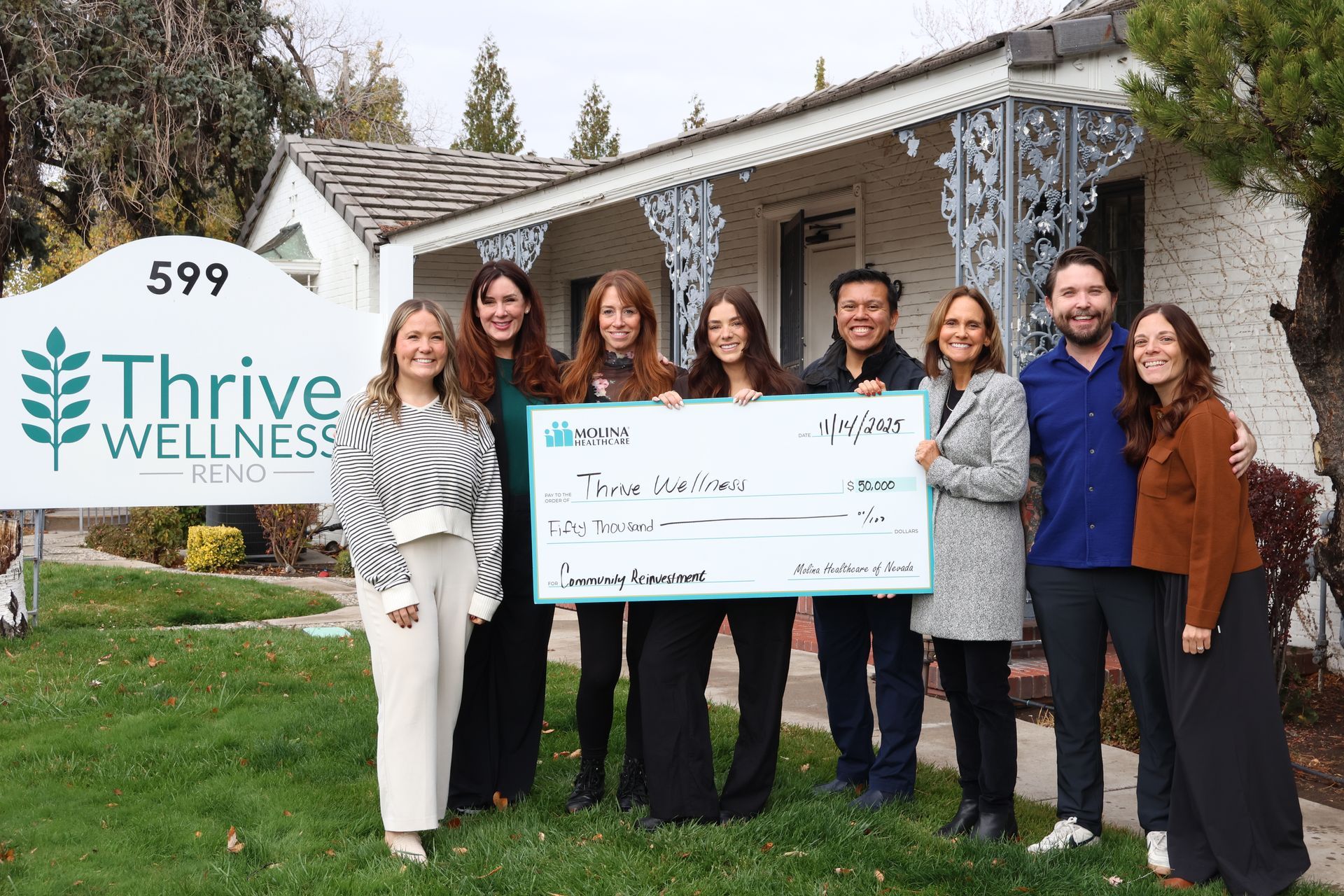
The Greenhouse at Thrive Wellness A New Chapter of Hope and Healing in Nevada On Friday, November 14 , we gathered with our partners at Molina Healthcare to share an important moment for our community. Together, we celebrated Molina’s generous $50,000 grant , an investment that is helping bring The Greenhouse to life. Their support is not only a financial contribution—it’s a statement of belief in the young people and families of Nevada who deserve access to compassionate, evidence-based mental healthcare close to home. This gathering marked the beginning of something we’ve dreamed about for years: a place designed specifically for adolescents and emerging adults to receive the care, connection, and support they need during some of the most vulnerable moments of their lives. Something New Is Growing In early 2026 , Thrive Wellness will open The Greenhouse , Nevada’s first residential treatment center devoted to adolescents and emerging adults navigating eating disorders, anxiety, and OCD . For too long, families have faced a heartbreaking dilemma—send their child far from home for treatment or go without the specialized care they need. The Greenhouse is our answer to that gap. It will be a place where young people can settle into an environment built for healing, where they are understood, supported, and surrounded by a team that believes in their capacity to recover. The Greenhouse represents a natural extension of our mission. It’s a living expression of our belief that recovery is possible—and that with the right support, families can find their footing again. 
November 11, 2025
Are you looking for a meaningful way to give back this holiday season? Thrive Wellness is excited to continue our 6th Annual Giving Tree Program in collaboration with Perenn Bakery this winter. This year, Thrive Wellness Reno and Perenn Bakery are proud to partner with Ronald McDonald House Charities® of Northern Nevada. The organization supports families with children receiving treatment at area hospitals, providing comfort, hope, and a home-away-from-home during challenging times. Ronald McDonald House Charities offers essential services, removes barriers, strengthens families, and promotes healing when children need healthcare the most. How It Works Simply take one (or a few) tags from the Giving Tree, each listing an item you can purchase and donate for residents of the Ronald McDonald House. Then, drop off your item(s) at one of our designated donation locations by Friday, December 19. Items Needed: Restaurant gift cards Walmart or Target gift cards Games, puzzles, and coloring books Toys (Barbie, Hot Wheels, Lego sets, craft sets, magnet blocks, baby dolls, action figures, journals, infant toys, etc.) Children's books (picture, chapter, and graphic novels) Toiletry sets (for adults) Lotion/self-care gift sets (for adults) Sweatshirts/hoodies (adults, XS-XXL) Scarves, gloves, fuzzy socks, pajamas (all sizes) Infant diapers, onesies, and baby bottles Bulk individually wrapped snacks (granola bars, chips, etc.) Please ensure all donations are new, in original packaging, and unwrapped. Donation Drop-Off Locations Please deliver donations by Friday, December 19, to one of the following sites: Thrive Wellness 201 W Liberty St., Suite 201, Reno, NV 89501 Perenn Grocery 7600 Rancharrah Pkwy, Suite 130, Reno, NV 89511 The first 50 people to return their donations will receive a complimentary ornament gift!  Why We Give Back Through our Giving Tree program, we’re honoring one of our core values at Thrive Wellness: staying rooted in community. This annual tradition allows us to give back to those who need support most during the holiday season. We invite you to join us by taking a tag at any Thrive or Perenn location and helping spread kindness throughout our community. There’s no better way to embrace the holiday spirit than by supporting local families with thoughtful, heartfelt donations. We are deeply grateful for your generosity and continued support. Thank you for helping us make a difference!
More Posts

Start your healing journey today

NEXT STEPS

Are you ready to find hope? We can't wait to connect you with the care you need. To get started with us, please reach out using the link below.   

Obsessive Compulsive Disorder

Learn more →

Perinatal

Mental Health

Learn more →

Obsessive Compulsive Disorder

Learn more →

Perinatal

Mental Health

Learn more →