Life Is a Balancing Act: Why Maintaining Balance Matters

Thrive • January 25, 2022

By Thrive Waco Therapist Katherine Moore, MA, LPC-Associate

A BALANCED LIFE VS. AN IMBALANCED LIFE

The Grounding Benefits of Balance

Leading a balanced life means equally distributing your energy among things that sustain you physically, mentally, and emotionally. These often include a mix of “work and play,” such as employment, relationships, social activities, hobbies, and self-care practices. Balance between one’s obligations and interests creates a stable foundation that equips individuals to embody their best selves, cope with unexpected obstacles, and manage stress .

The Draining Nature of Imbalance 

Alternatively, imbalance in one’s life can upset a person’s overall well-being. Instead of balancing their attention between endeavors that nourish their physical, mental, and emotional health, individuals struggling with imbalance tend to overextend themselves, dedicating a disproportionate amount of their energy to activities that don’t cultivate comparable happiness. Investing too much time in undertakings that diminish your spirit can lead to burnout, which can cause you to feel exhausted, stressed, irritable, unsociable, and sick. 

GET CENTERED: HOW TO ACHIEVE BALANCE IN YOUR LIFE

When setting out to find a sense of balance between your obligations and interests, it’s important to consider how your current priorities align with your values. 

You can assess this by asking yourself:

  • What elements of my life are most important to me? 
  • What elements of my life are currently receiving the majority of my time and energy? 
  • How much of my time and energy am I currently spending on the aspects of my life that I feel are most important? 
  • How much of my time and energy am I currently spending on the aspects of my life that I feel are less important? 

Your responses should provide clarity on the facets of your life that reward your attention with more purposefulness, contentment, and joy. Alternatively, self-inquiry should offer more insight into the parts of your life that are not worth as much of your energy. 

With this new understanding, you may consider setting healthy boundaries, saying no to obligations that aren’t serving you, and saying yes to your physical, mental, and emotional needs. By dedicating more of yourself to the elements of your life that you value, you can honor your authenticity, nurture your inner-self, and embrace life with renewed inspiration.

Just as life is ever-changing, balance is an ongoing and evolving practice. New developments will inevitably arise, so it’s important to remain both flexible and intentional as you adjust the allocation of your attention to elements that nourish your well-being.

DISCOVERING HARMONY IN ALL AREAS OF YOUR LIFE

By offering unbiased, professional perspectives, therapists can guide you in evaluating the state of balance in your life. From there, they can empower you to establish balance, so you can embrace each day feeling exhilarated rather than exhausted. If you would like to learn more about Thrive’s therapeutic services , reach out to us.   

About the Author

Thrive Waco Therapist Katherine Moore, MA, LPC-Associate

Katherine’s areas of clinical focus include mood disorders (such as depression and anxiety), adjustment, identity, self-esteem, life transitions, relationships, as well as grief and loss. She’s passionate about facilitating growth, providing empathy, and forming genuine connections with clients. Katherine believes that we all have stories that shape us and make us who we are, and she feels honored to create a safe space where an individual’s story can be shared. She hopes that all clients feel seen and heard during sessions with her and that through the process of therapy they discover new insights, awareness, authenticity, and self-agency.

Katherine earned her Master of Arts degree in Clinical Mental Health Counseling from the University of Mary Hardin-Baylor. She earned her Bachelor of Arts in English at the University of Mary Hardin-Baylor as well.

Quality time is one of Katherine’s top love languages, and when not at Thrive she can be found sharing that time with those she cares for, browsing bookstores, watching the same shows repeatedly on Netflix, exploring the outdoors, and traveling.

Supervised by Erin McGinty Fort, LPC-Supervisor (76628) | Texas State Board of Examiners of Professional Counselors

Download our free wellness guide.

Discover the power of small, sustainable changes with "How to Thrive: 10 Simple Habits for Healthy Living." This guide offers practical, easy-to-follow habits that promote physical, mental, and emotional well-being.

By Erin McGinty Fort, MS, MHA, CPC, LPC-S, CEDS-C December 18, 2025
Sometimes, people need more support, structure, and monitoring than the typical outpatient setting can provide. When this happens, the treatment team will usually recommend that someone be "stepped up" to a different level of care, or program, that can better meet their needs. I like to think of it as being similar to medication dosages; people need different strengths of medications, or dosages, to get better when they're sick. Stepping someone up to a higher level of care is like increasing the dosage of a medication to match the severity of their symptoms. How Are Higher Levels of Care Different from Standard Outpatient Care? At the core of differentiating higher levels of care from standard outpatient care is the intensity and structure of the treatment. Higher level of care programs tend to offer more days of treatment each week and more hours of treatment per day than in the outpatient setting. Those in higher level of care programs may also meet with their treatment team members more frequently each week. There are more staff present to support someone at or after meals and snacks, or to help those who are having urges to engage in compulsions or other harmful behaviors. Clients in our HLOC programs get access to an assortment of treatment modalities tailored to their individual needs, including personalized therapy sessions, group support, medication management, medical nutrition therapy with a dietitian, and check-ins with our primary care providers. We support clients with personalized treatment plans and regular assessments to monitor and tweak interventions as needed. Higher levels of care also offer increased peer interaction and support. Intensive programs incorporate additional group therapy sessions, which can help those in treatment feel less alone as well as create a greater sense of community. For some people, it can be difficult to devote the time and energy needed to recover while also balancing other responsibilities like school or work. Stepping up to more intensive levels of care allows people to fully dedicate themselves to recovery. As they get better and make progress, a person may be stepped back down to a less intensive level of care to start practicing their recovery in their usual home, school, or work settings while also receiving professional support from their treatment team. What Levels of Care are Available? At Thrive Wellness, we offer four different levels of care to help clients step up (or down) in their treatment when needed: -  Outpatient Treatment - weekly, bi-weekly, or monthly meetings with a therapist, psychiatrist, primary care provider, and/or dietitian. - Intensive Outpatient Program (IOP) - A minimum of three hours per day, three days per week. - Partial Hospitalization Program (PHP) - A minimum of six hours per day, five days per week. - Residential Treatment - Coming soon in 2026, The Greenhouse at Thrive will offer residential treatment for eating disorders, anxiety disorders, and obsessive-compulsive disorder. This level of care offers 24-hour support for those aged 12-24 living in our residential treatment center. How To Decide Which Level of Care is Right for You If you're unsure which option is right for you or your loved one, we offer a free assessment that can be completed with our admissions team. In this initial assessment, we'll gather information from you about what you're struggling with, speak with our team of providers, and then make a recommendation for what level of care we feel is the best fit for you and your needs. If you’re experiencing symptoms of an eating disorder, anxiety disorder, or other behavioral or mental health challenges, don’t hesitate to reach out. To get started with our intake process, give us a call at 775-525-8103 or fill out this form . We can’t wait to help you Thrive.
December 2, 2025
Like the fir tree, a symbol of endurance rooted in hope, our Family Inclusive Recovery (FIR) approach reflects the strength that grows when families face challenges together. At our new residential center “The Greenhouse”, FIR is more than a treatment model, it’s a philosophy of healing that places families at the heart of recovery for adolescents and young adults navigating eating disorders, anxiety disorders, and obsessive-compulsive disorder (OCD). We believe lasting healing doesn’t happen in isolation; it’s built with the support of families through perseverance, hope, and compassionate care. What Is Family Inclusive Recovery (FIR)? Family Intensive Recovery (FIR) is a specialized and immersive approach that actively engages caregivers as central agents in their child’s healing process. Rather than seeing families as contributors to a problem, we view them as essential partners in recovery. Drawing from two evidence-based frameworks, Supportive Parenting for Anxious Childhood Emotions (SPACE) and Family-Based Treatment (FBT), FIR helps families cultivate resilience, confidence, and connection throughout the journey to recovery. Grounded in SPACE and FBT Through the SPACE model, parents learn how to recognize and reduce well-intentioned but unhelpful behaviors known as accommodations that can reinforce anxiety and OCD symptoms. By shifting from rescuing to supporting and challenging, parents develop the confidence to guide their child through discomfort, helping them build distress tolerance and self-trust. Simultaneously, Family-Based Treatment (FBT) empowers families to take an active, compassionate role in their child’s nutritional and emotional recovery. Parents learn how to support weight and nutritional restoration, disrupt the eating disorder’s patterns, and reestablish boundaries that promote health and growing autonomy. Together, these approaches strengthen both the individual and family system, allowing recovery to take root within an environment of empathy and optimism. From Blame to Collaboration A cornerstone of the FIR model is removing blame. At Thrive, parents are not viewed as the cause of their child’s struggles, but rather as key partners in recovery. Treatment focuses on joining forces to create a safe, supportive environment where: Families learn to sit with their child's discomfort alongside them without rushing to fix or control it. Parents practice compassionate firmness, setting boundaries grounded in care and safety. Teens and caregivers rebuild trust through open, honest communication. This collaborative framework helps families reestablish a sense of connection and confidence, fostering long-term resilience and open communication that extends beyond the treatment setting. Why Family Matters in Recovery Recovery from eating disorders, OCD, or anxiety isn’t a one-person job, it requires integrated care including the family. When families learn to navigate challenges together, they can model emotional regulation, reinforce healthy boundaries, and create conditions for sustained recovery. Through FIR, we aim to strengthen attachment bonds, reshape family interactions, and empower every member of the family to grow. The result is not only symptom reduction but also a deeper sense of unity, hope, and shared endurance, just like the steadfast fir tree that stands resilient through every season. Moving Toward Hope Family Inclusive Recovery invites caregivers and loved ones to become active participants in change. It’s a journey of learning, letting go, and leaning into love and acceptance. Together, families and clinicians can cultivate the courage in clients to face uncertainty, and in doing so, help them discover that recovery is not just possible, but enduring. If you’d like to learn more about Family Intensive Recovery at The Greenhouse or how we support families in eating disorder and OCD treatment, reach out to our team today.
November 14, 2025
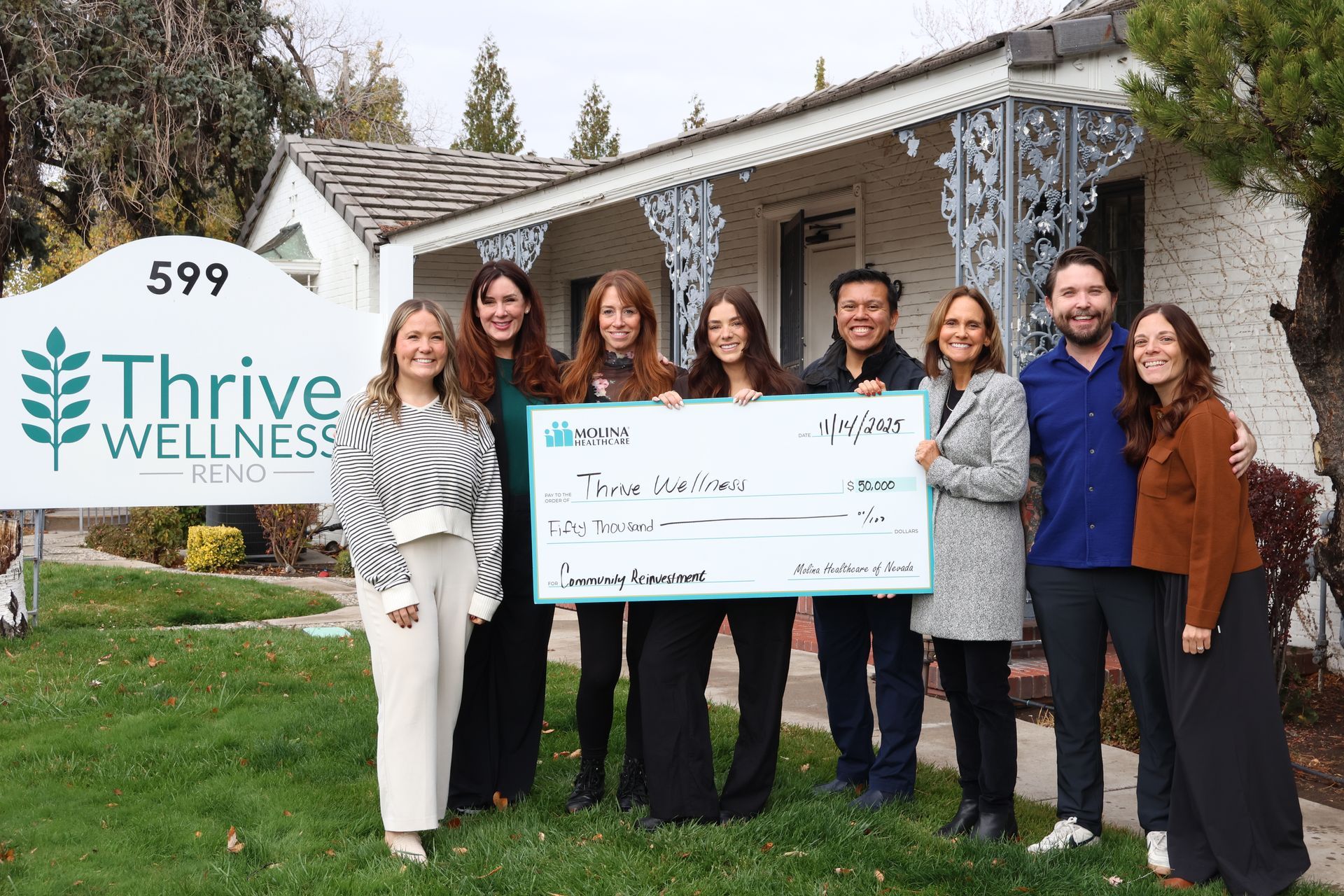
The Greenhouse at Thrive Wellness A New Chapter of Hope and Healing in Nevada On Friday, November 14 , we gathered with our partners at Molina Healthcare to share an important moment for our community. Together, we celebrated Molina’s generous $50,000 grant , an investment that is helping bring The Greenhouse to life. Their support is not only a financial contribution—it’s a statement of belief in the young people and families of Nevada who deserve access to compassionate, evidence-based mental healthcare close to home. This gathering marked the beginning of something we’ve dreamed about for years: a place designed specifically for adolescents and emerging adults to receive the care, connection, and support they need during some of the most vulnerable moments of their lives. Something New Is Growing In early 2026 , Thrive Wellness will open The Greenhouse , Nevada’s first residential treatment center devoted to adolescents and emerging adults navigating eating disorders, anxiety, and OCD . For too long, families have faced a heartbreaking dilemma—send their child far from home for treatment or go without the specialized care they need. The Greenhouse is our answer to that gap. It will be a place where young people can settle into an environment built for healing, where they are understood, supported, and surrounded by a team that believes in their capacity to recover. The Greenhouse represents a natural extension of our mission. It’s a living expression of our belief that recovery is possible—and that with the right support, families can find their footing again. 
More Posts

Start your healing journey today

NEXT STEPS

Are you ready to find hope? We can't wait to connect you with the care you need. To get started with us, please reach out using the link below.   

Obsessive Compulsive Disorder

Learn more →

Perinatal

Mental Health

Learn more →

Obsessive Compulsive Disorder

Learn more →

Perinatal

Mental Health

Learn more →